Historical Studies
Coliseum Theater - Seattle
Archival Research | Documentation | Digital Modeling
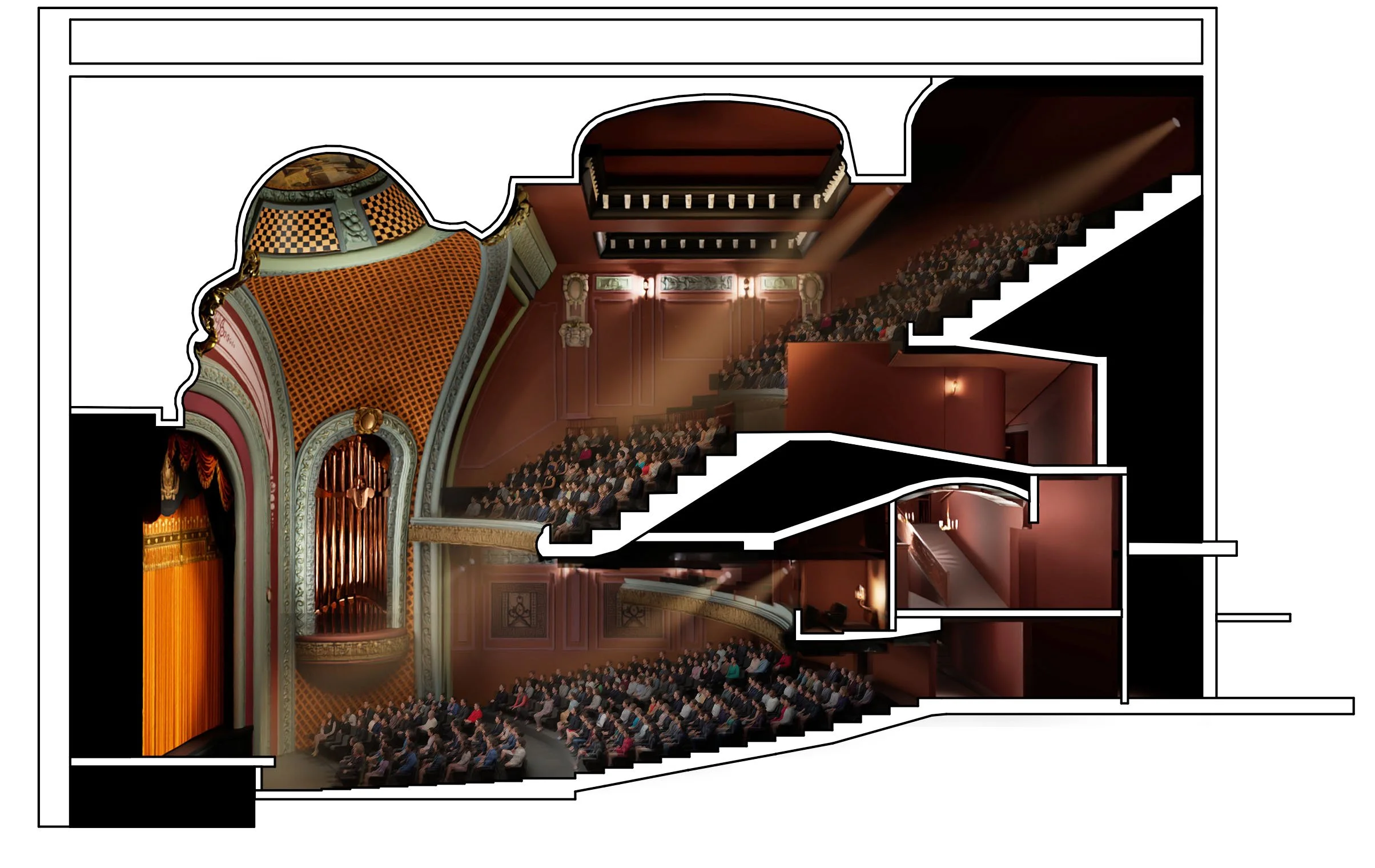
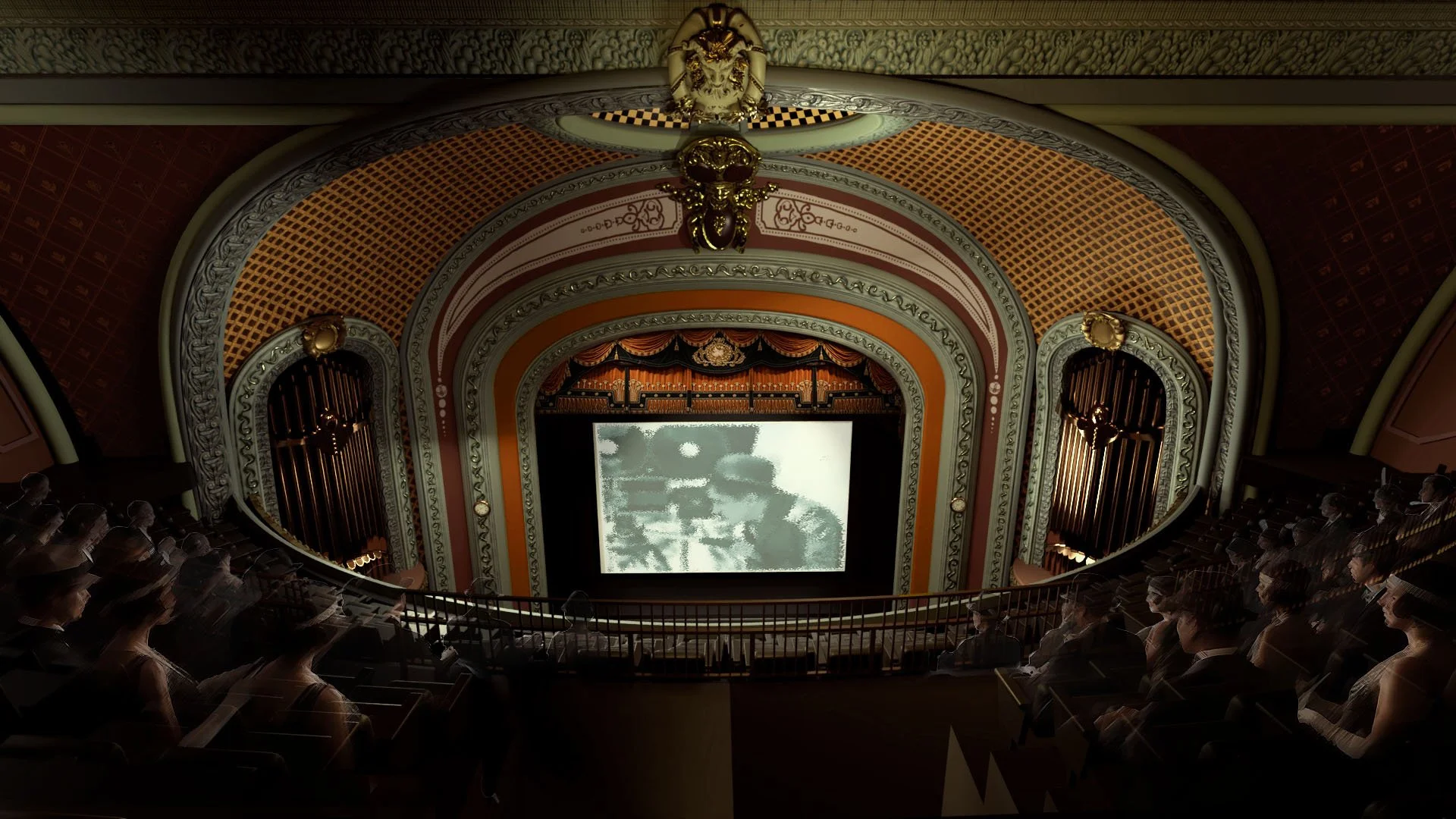
Designed by Marcus Priteca, the Coliseum Theater opened in 1916 in Seattle as a 2,400 seat silent movie cinema. Hailed as one of the world’s first “photoplay palaces,” it featured a mix of renaissance ornamentation (masks, wreaths, cartouches) and Egyptian mosaics and motifs. The color scheme featured “Byzantine orange” and black.
In 1950, the interior was modernized, masking much of the original ornamentation, and the original 1915 interior was forgotten. The original corner entry - featuring a cupola and quarter-spherical dome inspired by the Parthenon - was demolished for a new marquee featuring a Motion Picture Association statue, although few are likely to remember seeing it, as it was taken down and not replaced.
In 1993, much of the theater interior (the lower auditorium and mezzanine level) was demolished and converted to a Banana Republic. Structural upgrades were partial. The upstairs balcony was abandoned, but left in place - a forgotten Seattle space. The 1950’s marquee was removed, although the white terra cotta exterior was restored and designated on the National Registry.
Our team was tasked with rediscovering the design of the historic interior.

Brett Holverstott
FGC

Elijah Evenson
FGC
Providence Park Stadium Expansion
Research | Design | Presentation | Publication
After a decisive MLS Cup victory in 2015, the ownership of the Portland Timbers FC sought to expand and revitalize their historic stadium, today known as Providence Park.
As a key member of the research, development, and design team, ALIS founder Keith Alnwick established the groundwork for an intensive feasibility study and synthesized concepts into a compelling vision and master plan for future expansion and development.
Inspired by beloved soccer stadiums and open-air arenas worldwide, the expansion creates a cascade of seats that puts viewers on top of the action and adds to the legendary atmosphere of Providence Park. A century after its opening, the expansion completes the original stadium while adding a modern, open, and transparent new form.
Composed of many elements and layers of history, the character and experience are wholly unique and connected to the city of Portland, creating one of the true “Cathedrals of Soccer” in North America.